Pages

Thursday, July 7, 2011

Poarta Maicii Domnului din Egipt


Poarta Maicii Domnului

Biserica Al-Adra El Adawia

Biserica si manastirea Al-Adra El Adawia din Egipt


In sudul orasului Cairo, intr-un loc scaldat de la facerea lumii de apele domoale ale Nilului, se afla o poarta sfintita spre ceruri, prin care se ridica la Dumnezeu rugaciunile crestinilor veniti la inchinare in acest antic si miraculos altar dedicat Fecioarei Maria: Biserica si Manastirea Al-Adra El Adawia din Maadi.

Sanctuar al sperantei, al durerii mamei innebunite de gandul ca-si poate pierde pruncul preaiubit, locul este marcat de povestea vietii a trei femei remarcabile din spatiul biblic: Iochebed, Bithiah si Fecioara Maria.


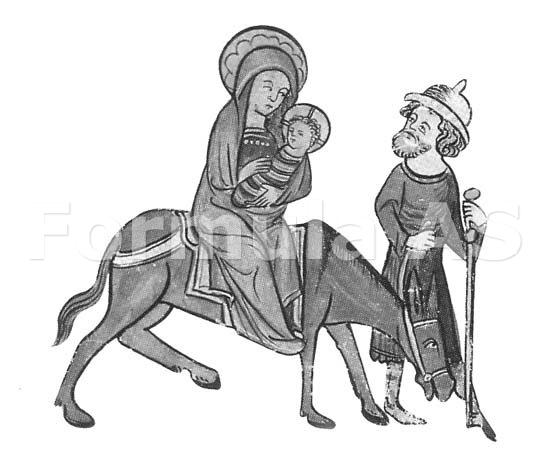
Fuga in Egipt
Poarta Maicii Domnului
Legenda locului incepe cu destinul pribeagului print al Egiptului, Moise, care, nascut sclav, crescut de fiica faraonului si alungat intr-un exil amar, in care isi va castiga traiul ca pastor, inainte de a-si incepe misiunea profetica la poalele Muntilor Sinai, din tinutul Madianului, avea sa se intoarca pe pamantul Egiptului, pentru a-si salva poporul din robie!

Intr-un interviu pe care i l-am solicitat parintelui Antonios Ateia de la Biserica Al-Adra El Adawia, acesta afirma ca locul in care se ridica Biserica si Manastirea Al-Adra El Adawia este cel in care fiica faraonului, Bithiah, sau Fiica lui Dumnezeu, cum mai este cunoscuta, a scos din apa Nilului cosul impletit din papirus, in care biata Iochebed il pusese pe pruncul Moise.

Tot aici se afla si scarile pe care, secole mai tarziu, Iosif, Fecioara Maria, pruncul Iisus si o ruda a Maicii Domnului, Salomeea, fugari prigoniti de un alt tiran al istoriei, regele Irod al Iudeii, coborau in barca ce-i va duce spre Egiptul de Sus. De la marginea scarilor de piatra, ce coboara in apa Nilului de pe terasa larga a Bisericii Al-Adra El Adawia, panorama superba a Nilului, cu micile sale ambarcatiuni de lemn (felucca) navigand pe firul apei, este strajuita la orizont de "Granarele lui Iosif" sau "Muntii Faraonului", cum au mai fost denumite celebrele piramide aflate pe platoul Giza.

Aceasta este imaginea pe care in urma cu doua milenii o cuprindea cu ochii obositi de nesomn si grija Fecioara Maria, in vremea popasului Familiei Sfinte in Maadi.


La adapostul noptii

"Scoala-te, ia Pruncul si pe mama Lui, fugi in Egipt si ramai acolo pana iti voi spune eu; caci Irod are sa caute Pruncul, ca sa-L omoare" (Matei 2:13).
Poarta Maicii Domnului

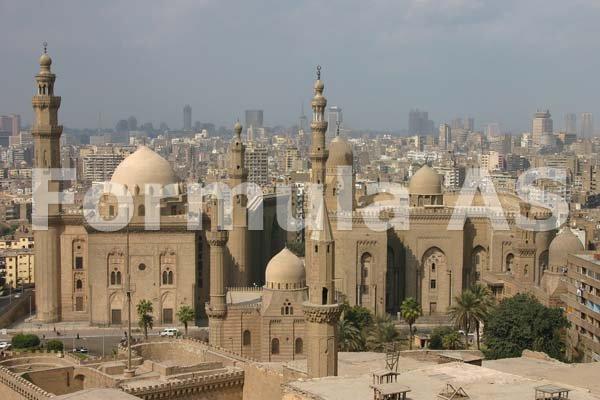
Cairo - in metropola egipteana se mai pastreaza amintirea Sfintei Fecioare Maria


Cu revelatia onirica a lui Iosif incepe povestea exilului Familiei Sfinte in Egipt, pe un drum anevoios, parcurs de-a lungul a trei ani si jumatate. Sosirea Familiei Sfinte in Maadi marca, astfel, momentul sfarsitului calatoriei lor terestre de-a lungul coastei mediteraneene a Peninsulei Sinai si prin Delta Nilului, si al imbarcarii lor, pentru a continua exilul, pe cursul fluviului, spre sud.

In vremea aceea, Maadi se afla in antica capitala a Egiptului, Memfis, si era un important si strategic port fluvial, prin care pietre pretioase, esente rare, condimente si alte marfuri exotice si de lux, aduse tocmai din indepartata Nubia, erau transportate mai departe, de caravane, pe faimosul Drum al Matasii.

De altfel, numele El Adawia si Maadi vin de la verbul "ada" sau "Y'aday" care semnifica "a trece", si de la "Maadiaa", care inseamna, in traducere din limba araba, pod.
Poarta Maicii Domnului

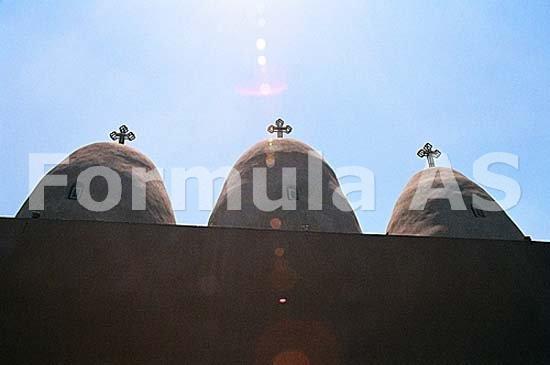
Turlele bisericii: cruci printre moschei


Pentru ca regele Irod il instiintase pe guvernatorul roman al Egiptului, Gaius Turranius, despre fuga Familiei Sfinte, si patrule inarmate ii cautau pe intreg teritoriul tarii, calatoria pruncului Iisus si a parintilor sai in Egipt a fost facuta in mare taina, la adapostul intunericului noptii si nezabovind niciodata prea mult in acelasi loc.

Traditia spune ca Familia Sfanta si-a gasit adapost, de-a lungul exilului sau din Egipt, in sanul comunitatilor evreiesti, si atesta existenta, pe locul in care se afla astazi Biserica Al-Adra El Adawia, a unei vechi sinagogi, in care Maria, Iosif si pruncul lor au gasit ocrotire, vreme de 10 zile.

Conform parintelui Antonios Ateia, in urma cu douazeci de ani, a fost descoperit sub lacas un tunel secret, paralel cu Nilul, ce ar fi fost construit in vremea persecutiei crestinilor si despre care traditia spune ca Familia Sfanta ar fi trecut prin el, iesind la suprafata intr-un loc indepartat de agitatul port din Memfis, intesat de patrulele romane, unde s-ar fi imbarcat si ar fi trecut Nilul pe malul opus.


Biblia plutitoare


"Am chemat pe Fiul Meu din Egipt"
(Matei 2:15)
In ziua de 12 martie 1976, dupa slujba de dimineata, in apropierea scarilor pe care Familia Sfanta coborase cu doua milenii in urma, pentru a se imbarca, a fost gasita o biblie plutind pe apa Nilului.
Poarta Maicii Domnului

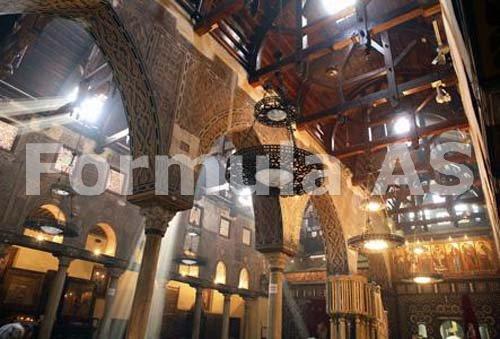
Interiorul bisericii

In ciuda greutatii sale si a faptului ca hartia era imbibata cu apa, biblia plutea si era deschisa la capitolul Isaia 19:25: "Binecuvantat sa fie Egiptul, poporul Meu...". Astazi, Biblia Plutitoare, cum a fost denumita, sta intr-o racla vegheata de icoana Fecioarei Maria, intr-o capela adiacenta naosului bisericii.


Peste ani, un credincios venit sa se roage in lacasul Fecioarei Maria a fotografiat Biblia Plutitoare, si la developare a aparut pe fotografie o pata de lumina, in care se distingeau clar siluetele a patru persoane.

Cea de-a patra persoana era Sfanta Salomeea, ruda Maicii Domnului, confirmandu-se, astfel, revelatia papei Theophilus, in care Fecioara Maria i-a dezvaluit acestuia ruta exacta a exilului in Egipt si faptul ca Salomeea insotise familia sfanta.


Deasupra intrarii in capela se afla o icoana facatoare de minuni a Fecioarei Maria, ce a lacrimat cu lacrimi de sange, in data de 18 ianuarie 1983.
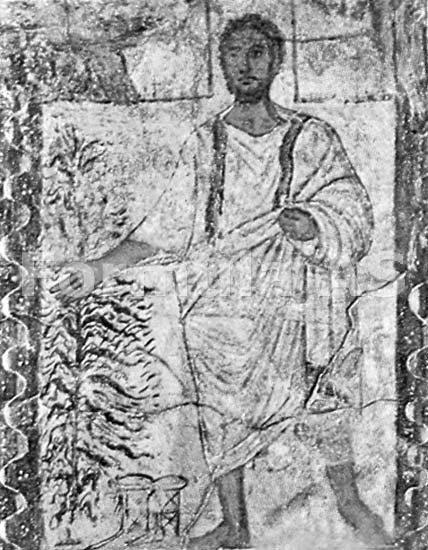
Poarta Maicii Domnului

Moise si micul ghimpe in flacari

Alaturi de racla Bibliei Plutitoare, se afla moaste pretioase din trupurile Sfantului Gheorghe, al Sfantului Abu Sefeen Philopateer, al parintelui Salama, ale Martirilor din Maadi, Akhmeem si Fayoum, iar intr-o capela adiacenta, se odihneste fostul preot al Bisericii Al-Adra El Adawia, Bishara Ibrahim, ce se spune ca avea viziuni cu Fecioara Maria.


Biserica, impodobita cu cele trei turle ce se zaresc de la distanta, are trei altare inchinate Fecioarei Maria (centru), Sfintilor Martiri Gheorghe, Damian si Mina (dreapta) si Sfintilor Parinti Antonie cel Mare, Paul si Shenuda al Sohagului (stanga).

Am parasit Biserica Al-Adra El Adawia cu sufletul cuprins de o nemasurata liniste, un sentiment pe care-l incearca toti cei care vin sa se inchine si sa caute alinare, in nevoile lor pamantesti, la sfantul altar al Fecioarei Maria din Maadi.

Urmele trecerii lui Iisus si ale Sfintei Sale Maici, fugari pribegi in Egiptul binecuvantat de profeti, precum Avraam, Isaac, Iacob, Moise si Ieremia, sunt porti deschise catre Dumnezeu, unde istoria, traditia si miracolele se intrepatrund si indeamna la permanenta meditatie...


MADALINA BANICA - Cairo, Egipt

Share/Bookmark

Thursday, June 30, 2011

Sunday, June 26, 2011

The Realm of Jinn the Elemental Spirits


Forget what you think you know about the A’lam Al-jinn or the (Realm of the Hidden ones ) or think you know about “genies” from movies and old TV shows. In the Arabic tradition Jinns or Djinns are very real spiritual entities and not some mythical granter of wishes.


The word Jinn in Arabic refers to something that is (concealed and hidden from the human eyes ) in Al-Qaamoos Al’muheet ( which is the biggest arabic dictionary of all times ) said this about the word ” JINN ” { Jannahu al-layla } which means ( the night coverd him ) ( or concealed him) so this word simply means some being who is Hidden from the normal human eye.


Jinns were mentioned in the Quran, long before they become the “Genies” of European folktales. The derivation of the word actually pre-dates the Arabic, and comes from the Hebrew “JNN” which “means to be hidden”, and accounts for Jinns being unseen often playful if not malicious spirits.


Prior to the rise of Islam, archeologists have found the use of the word Djinn in ancient Middle Eastern cultures to refer to any spirit less than God, which would include angels or demons. But we know Angles and Other Spirits are not Jinns or Genies .


So what are the “JINNS” ? one may ask


The Jinn or Jinni or Genies or Djinn are part of what the Ancient people of this Earth used to call (Elemental Spirit)


So what are the ” Elemental Spirits “ ?


Elementals spirits are what some call the Nature Spirits or Devas or the Faeries . this type of Spirits have only one element to their nature usually Air, Fire, Water and Earth , so Djinns are part of the Fire Spirits . but in Arabic the rest of the other groups are also known as the JINNS, since no human eye can see them and this what most arabic scholars call ( Jaan al Bahar , Jaan al Hawa , Jaan al Ar’d and jaan al nai’r ) in English you can translate them ( Water Spirit , Air Spirit , Earth Spirit and Fire Spirit )


Do they have any names besides their Natural Elements ?


\

Yes Spirits of the Four Elements are divided into four categories, earth, air, fir and water. Let us look at each of them in turn.


1. EARTH: ( Jaan Al A’rd ) Earth spirits, that is the beings, which relate to rocks, stones, minerals, precious gems, hills and mountains are traditionally called in English ( Gnomes ). All aspects of the solid physical structure of the planet come under their domain.


Although they can be found within rocks, they also have a freedom to move around but generally stay close to the ground . They are a) Gnomes b) Kobolds c) giants d) mountain spirits also in arabic they are call the { Ghul or Qu’laz } they are short about 1 to 2 feet tall and thy look old with full beard those are the Gnomes or the Ghulz , the other type are more bigger and bit taller , most of them live under ground , under the trees or on hill tops .


2. WATER: (Jaan Al-Bah’ar ) Water spirits are connected to all liquids, but their presences can be felt in a much more powerful way by streams, rivers, lakes and, of course, the sea. They are traditionally known as Undines, or Al’Aunabiy’in although stories of mermaids or A’rusatual Bah’r and mermen are accounts of these beings.


They are:

a) Nymphs b) undines c) nixies and d) na’iads , they have males and females. but their females are shines as if wet, is female, nude and without wings, the exquisite limbs gleam through the white auric flow, the arms are particularly long and beautiful, and she waves them gracefully in her flight. She is about four feet in height and her general coloring is silvery white, with gold stars round the head . ( Al-si’ah )


3. AIR: ( Jaan Al Ha’wa ) The spirits of the air are connected to all gaseous substances but like water beings are best sensed in winds and breezes. Because air moves so quickly they can be difficult to pin down. They are known as Sylphs in tradition although the perception of a ‘fairy’ with tiny wings that can fly is a close approximation to how they appear to children. this type of spirits is what most scholars call ” Al’arwah al Khaf’i ” ( the simple spirits ) they are very strong , they are a) Sylphs b) storm spirits c) fairies


These live in the element air, and are like light in the atmosphere. Sensitive to the movement of the atmosphere, they have a sleepy consciousness.Their task is to transfer light to the plants.The stream of air caused by a flying bird creates a sound they can hear. They like birds flying through the air. Sylphs are connected to movement in space, like modeling and directing the wind. Elves (or fairies) are more connected to the expansion of life in their area this what some Scholars call the Al’irfid


4. FIRE: ( Jaan Al Na’r these are what most people call the JINN ) Fire spirits can be found in volcanoes in nature but also in any fire, from candle to inferno. They are known as Salamanders or Vulcanii and are the most difficult of all of the elementals to connect with, being said to only associate with philosophers and adepts of the magical arts


There is a pantheon of sorts of Jinns most of these beings can shape shift to human forms and other forms too , but they can’t stand no longer then 20 – 30 minutes .


In Islam Jinns are described as creatures of free will created by Allah from Fire, much as humans are creatures of free will created from the Earth. By some interpretations of the Quran it was a Jinn who exerted this Free Will by not bowing to Adam when instructed to do so by God, and thus was banished from The Garden, and named Shaitan, or Satan.


In the Islamic tradition there are three types of beings the Angels, who are made of pure Light of God and are completely supplicant to God, they can do no evil, and cannot disobey The Word of God. Followed by Jinns and Humans who are creatures of free will. They can do good or evil and both shall be judged on Judgment Day.


The only difference between Jinns and humans is that humans are made of Earth and therefore are more material. Jinns are made from smokeless fire , so they cannot be seen by humans. But since they are basically non-corporeal like fire, they can exist almost anywhere, in the sea, in the air, the mountains, or very small spaces – like lamps.


In Sufisam we respect all the creatures of Allah , we don’t hate them nor we like to harm them we ask Allah to protect us from their evil doings why? because we can’t see them , but they can see us like the quran said ” Him (ibliz) and his tribe can see you where you can’t see them “


source somali sufisam

Share/Bookmark

Saturday, June 18, 2011

Wednesday, June 15, 2011

A USEFUL SITE

Share/Bookmark

WITH LOTS OF FREE INTERESTING BOOKS, HERE